
Artificial intelligence is often discussed in abstract terms: possibilities, risks, and future potential. At TSO, AI is already applied in very practical ways to improve how important and complex information in society is managed - such as legislation, regulation and official records.
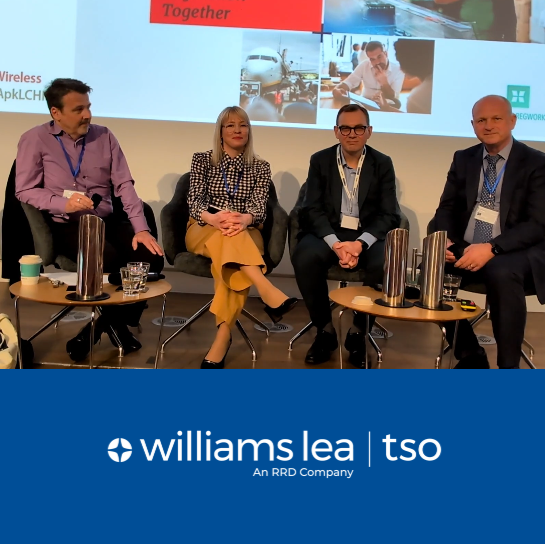
In a recent fireside chat at the Digital Leaders AI Expert Conference in Vilnius, I was joined by Alan Blanchard to talk through how TSO is using AI responsibly to unlock the value of official information, while keeping human expertise firmly at the centre.
What follows is a snapshot of the work we presented, and why it matters.
Making legislation more accessible and more useful
TSO publishes UK legislation and has been at the forefront of using AI to improve how that legislation is structured, enriched and reused. One of the most important developments has been the use of AI to semantically mark-up legislation data, turning dense legal text into linked, structured information.
Working in collaboration with The National Archives and the Department for Business and Trade, AI is now being used to analyse UK Legislation data, using the metadata it has been enriched with to identify where duties have been delegated to regulatory bodies. This allows obligations to be connected across primary and secondary legislation, helping build towards an index of regulation that joins up the full regulatory landscape.
AI is also playing a critical role in improving access to historic legislation and regulation. Much older material exists only as a scan saved as a PDF, which limits searchability and reuse. AI tools not only recognise document structure such as headings, footnotes, tables and references but are also able to fill in the gaps caused by the original scan - words obscured by creases, tears or folds, smudges and marks that need to be ignored. We can transform scanned documents into high‑quality structured data aligned with schema, reconciled carefully to ensure accuracy. The result is legislation that is easier to search, understand and apply.
Enhancing trust and usability in The Gazette
Another powerful example is The Gazette, the UK’s official public record. Notices published in The Gazette have legal standing and are relied on by courts, professionals and researchers, so data quality is critical.
TSO is using AI to enhance notice data submitted through many different routes, from online forms to APIs and email submissions. AI does not create notices – the legal requirements remain precise and controlled - but it does help enrich submissions by identifying key entities and their relationships. This creates semantic connections that make information easier to discover.
At TSO we are exploring how AI can be used to:
-Improve search across complex Gazette datasets for a diverse user base
-Unlock a 350‑year old historical archive using AI‑powered Optical Character Recognition (OCR), with human validation
-Provide an augmented live chat service to handle routine queries efficiently while improving response times
Together, these uses show how AI can enhance official services without compromising trust.
RegTech for regulators
Drawing on this, TSO has developed a publishing platform designed specifically for regulatory content. Traditional regulatory publishing often relies on PDFs, which are difficult to navigate, reuse or interpret correctly. By publishing regulation as enriched HTML and structured data, AI can be used to:
-Bring together dispersed rules and guidance
-Add temporal context so users can see what applies at any given date
-Improve navigation, search and interoperability
-Prepare regulation to be consumed accurately by machines and AI systems
This approach supports the emerging concept of rules as code, where regulation can be both human‑readable and machine‑readable. That matters because AI itself is now a major consumer of regulatory content, lifting, summarising and interpreting rules at scale.
AI with human experts in the loop
One of the key messages from our discussion was that AI alone is not enough. Large language models and automation bring clear benefits, but they also introduce risks - including hallucinations, bias and loss of nuance.
At TSO, AI is used alongside expert human oversight. Whether it is transcribing complex content, validating extracted data or transforming regulatory material, human judgement remains essential for accuracy, ethics and context.
The goal is not to replace expertise, but to amplify it.
Preparing content for an AI‑enabled future
As AI-driven search and analysis increase, organisations can no longer assume their content is only read by humans. Regulation, policy, and official information must now be accessible to people, machines, and AI systems alike.
The steps required to improve accessibility, structure and clarity for diverse human audiences also make content more resilient and reliable when used by AI. In that sense, AI readiness and good content practice go hand in hand.
Our work at TSO shows that when AI is applied thoughtfully - with the right controls, expertise and intent - it can make regulation clearer, more usable and more future‑proof.
If you would like to continue the conversation about how AI can responsibly transform regulation and official information, we would be delighted to connect simply email us at tsobd@tso.co.uk
Blog post written by Richard South, TSO CEO.