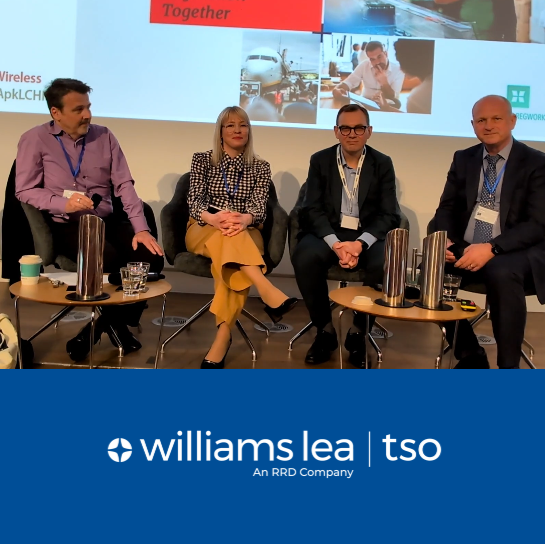
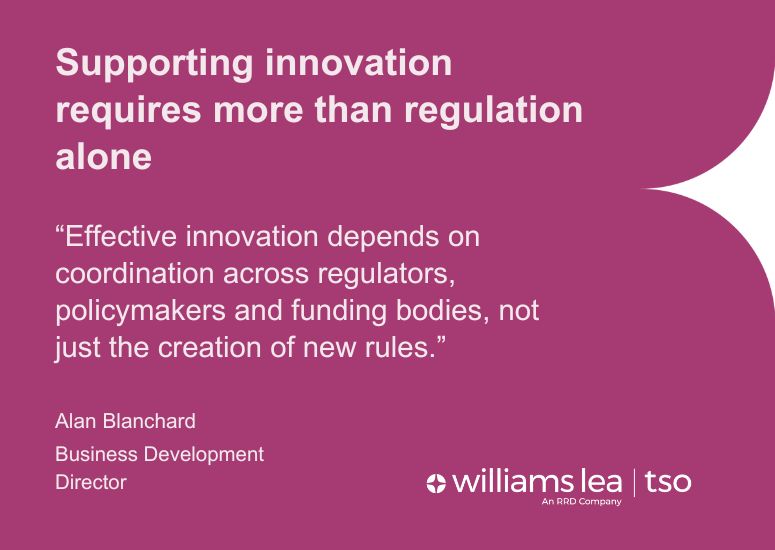
At the recent plenary session at the Institute of Regulation Annual Conference 2026, Lord David Willetts shared perspectives on the role of the UK’s Regulatory Innovation Office (RIO) and the broader challenge of supporting innovation within regulatory frameworks.
As technologies such as AI continue to evolve, the question for regulators is not only how to respond, but how to create an environment where innovation can develop safely and effectively.
Innovation across regulatory boundaries
One of the clearest themes was that innovation rarely sits within a single regulatory domain.
Emerging technologies often span multiple sectors, requiring engagement with more than one regulator. While this reflects the complexity of modern systems, it can create challenges for organisations seeking to navigate regulatory pathways.
This highlights the importance of:
-coordination between regulators
-clearer routes for engagement
-more joined-up approaches to decision-making
Aligning funding and regulatory pathways
Another important consideration is the relationship between innovation funding and regulatory readiness.
Organisations may receive support to develop new technologies, but still face challenges when bringing them to market. This suggests a need for closer alignment between funding bodies, policymakers and regulators.
Earlier engagement and clearer communication can help ensure that regulatory considerations are addressed alongside innovation, rather than after it.
The role of standards and flexible frameworks
There is also a growing recognition that not all challenges require new regulation.
Standards and adaptive frameworks can provide a more flexible approach, particularly in areas where technology is evolving quickly. This allows regulation to remain relevant, while still supporting innovation and maintaining oversight.
Capability and capacity
Supporting innovation is not solely a policy question. It also depends on capability within regulatory systems.
This includes access to expertise, the ability to engage with new technologies, and mechanisms such as sandboxes that allow for testing in controlled environments.
Building this capability is an important part of enabling innovation in practice.
Balancing risk and opportunity
A further theme was the need to take a broader view of risk.
Regulatory decisions often focus on mitigating specific risks, but it is also important to consider the wider impact of innovation. In some cases, new approaches may reduce existing risks or deliver broader benefits.
This requires decision-making frameworks that can balance protection with progress.
Final reflections
For regulators, the challenge is increasingly one of coordination.
As technologies become more complex and interconnected, the ability to work across boundaries, engage early and adopt flexible approaches will be key to supporting innovation.
Initiatives such as the Regulatory Innovation Office reflect a growing recognition of this need.
For organisations operating in regulated environments, understanding how these dynamics are evolving and how to engage with them will be an important part of navigating the future regulatory landscape.
Blog post written by Alan Blanchard, TSO Business Development Director