The recent House of Lords Industry and Regulators Committee report, Time is Money: How Regulators Can Support Growth, adds to a growing conversation around how regulatory systems can better support innovation, investment and economic growth.
While regulation plays a critical role in protecting consumers, maintaining standards and supporting trust, the report highlights increasing concern around complexity, coordination and usability within modern regulatory environments.
Many of the themes identified in the report reflect wider conversations already taking place across the regulatory community, including the importance of collaboration, clarity and reducing unnecessary friction for regulated organisations.
Regulation and growth are not opposing forces
One of the report’s clearest messages is that regulation itself is not inherently a barrier to growth.
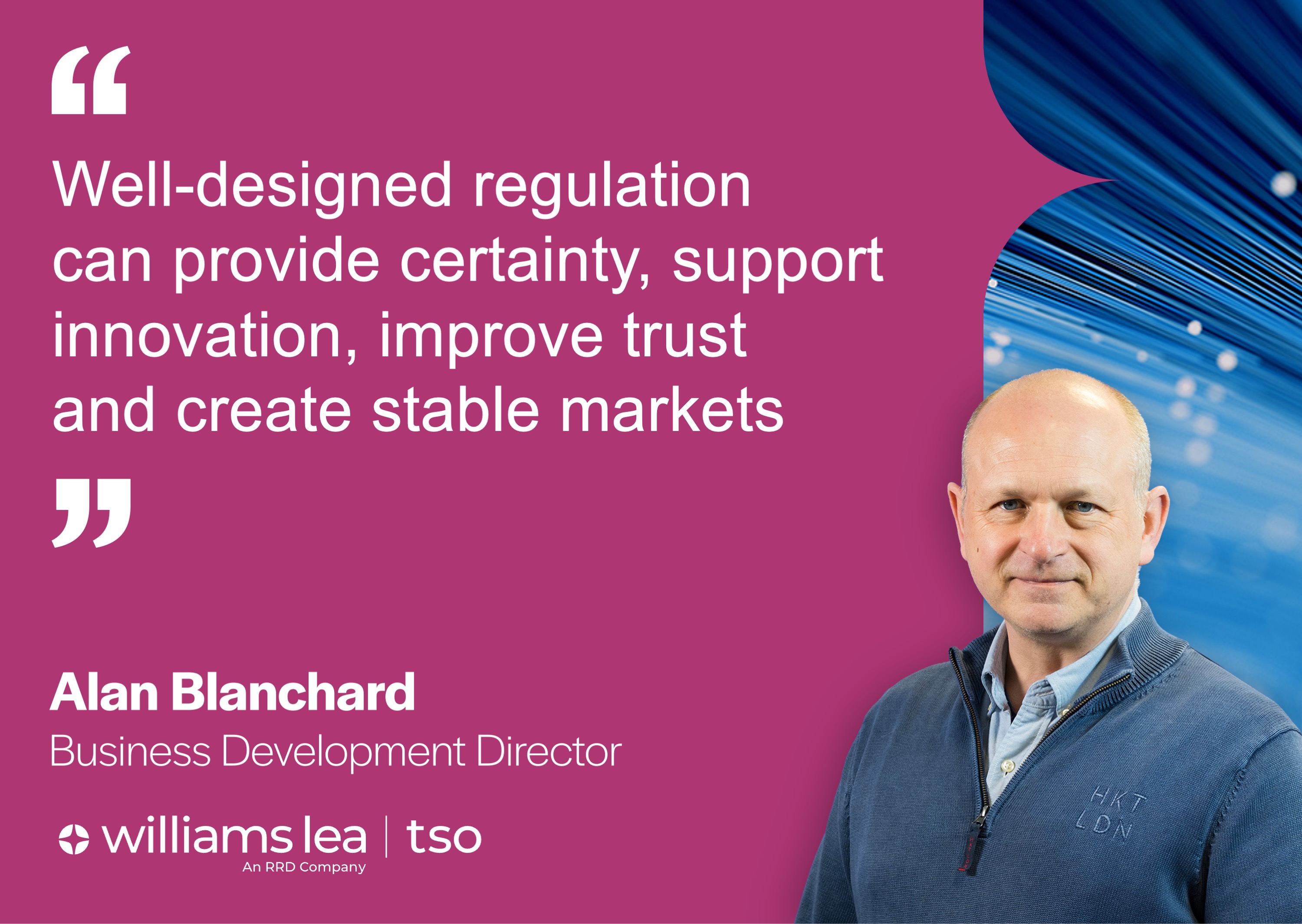
Well-designed regulation can:
-provide certainty
-support innovation
-improve trust
-create stable markets.
The challenge is ensuring that regulation remains proportionate, understandable and adaptable as technologies, industries and public expectations continue to evolve.
This is increasingly important as organisations navigate growing volumes of legislation, guidance and compliance obligations spread across multiple regulators and frameworks.
Coordination and clarity matter
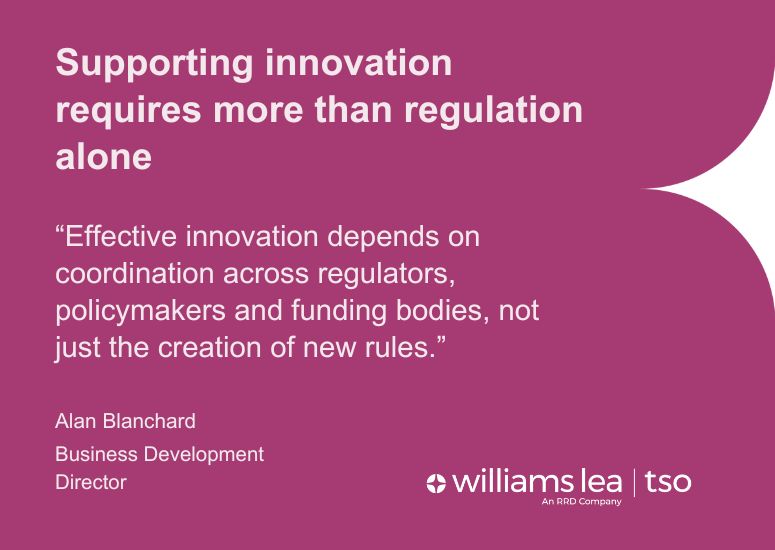
A recurring theme throughout the report is the need for better coordination across regulatory systems.
Emerging technologies, cross-sector risks and increasingly interconnected industries mean organisations often engage with multiple regulators simultaneously. Without clear communication and joined-up approaches, this can create duplication, uncertainty and unnecessary complexity.
The report also highlights the importance of:
-clearer regulatory pathways
-more predictable processes
-faster decision-making
-improved engagement with innovators.
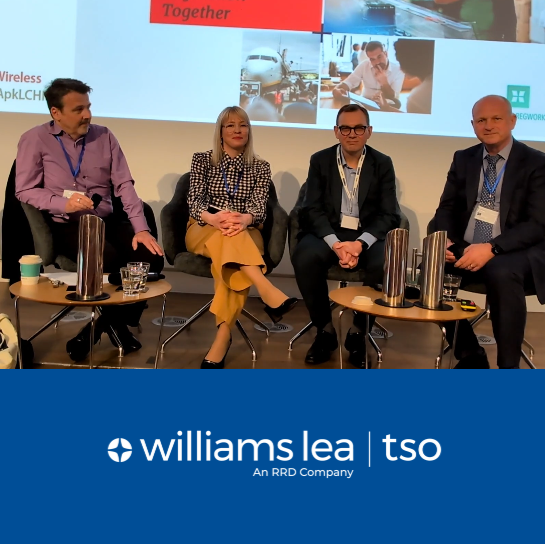
These themes closely align with discussions taking place across TSO’s Regulating for Growth roundtables, where regulators explored the practical realities of collaboration, stewardship and regulatory usability.
Usability is becoming increasingly important
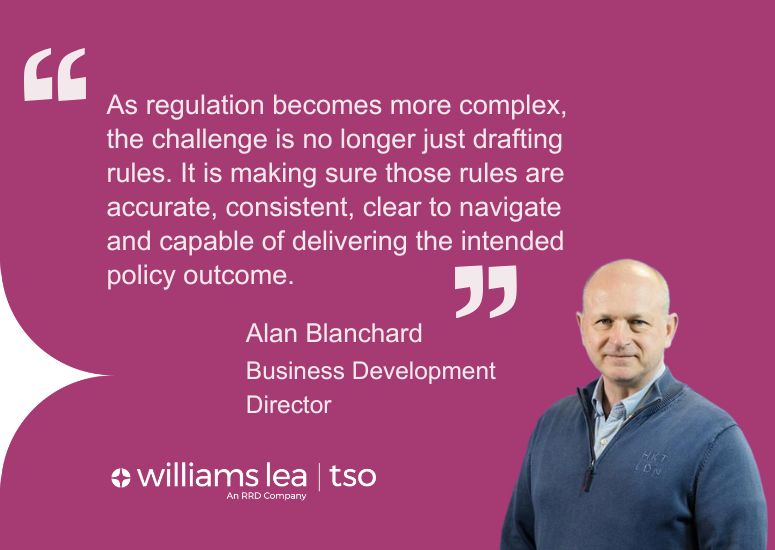
As regulatory systems grow more complex, accessibility and usability are becoming critical considerations.
It is no longer enough for regulation to simply exist. Organisations need to be able to:
-find information quickly
-understand obligations clearly
-navigate change confidently
-apply requirements consistently.
This creates an important opportunity for more structured, accessible and digitally enabled approaches to regulatory publishing and information management.
Improving discoverability, interoperability and usability does not reduce regulatory standards. It helps ensure regulation can be understood and applied more effectively in practice.
Supporting innovation through better information
The report also highlights the importance of supporting innovation through more flexible and responsive regulatory approaches.
As AI and emerging technologies continue to evolve, regulators and organisations alike are increasingly dependent on high-quality, structured and machine-readable information.
This reinforces a broader shift already underway:
-from static documents to structured data
-from fragmented information to connected ecosystems
-from access alone to usability and interoperability.
In this environment, clearer and more usable regulation becomes an important enabler of growth rather than simply a compliance requirement.
Looking ahead
The House of Lords report reflects a growing recognition that modern regulatory systems must evolve alongside the industries and technologies they oversee.
For regulators, this means balancing oversight with adaptability, collaboration and clarity.
For organisations, it means navigating increasingly interconnected regulatory environments while maintaining confidence and trust.
And for the wider regulatory ecosystem, it highlights the growing importance of making regulation easier to find, use and understand for people, organisations and increasingly, machines and AI systems alike.
Blog post written by Alan Blanchard, TSO Business Development Director.