Thirty years of TSO reflects a publishing heritage stretching back more than two centuries and a period of remarkable change in how authoritative information is published and accessed. Following TSO's anniversary event, we explore the perspectives shared by our expert panel, the evolution of official and regulatory publishing, and the opportunities and challenges ahead.
Government publications do more than communicate information. They record the laws, decisions and developments that shape society, providing an enduring record of change and helping people understand the world around them.
For TSO, 2026 marks 30 years since the organisation was established, building on a publishing heritage stretching back to HMSO in 1786. To celebrate this milestone, we brought together clients, partners and colleagues at Stationers' Hall in London on 13 October to reflect on how official and regulatory publishing has evolved and what the future might hold.
A publishing heritage spanning more than two centuries
Government publications do more than communicate information. They record changes in legislation, public policy and society, providing an enduring account of the issues and decisions that have shaped the country.
From Acts of Parliament and official guidance to The Highway Code and The Gazette, these publications form an important part of the UK's public record, helping people understand the laws, standards and responsibilities that affect their lives.
TSO's connection to this publishing tradition stretches back more than two centuries, to the establishment of His Majesty's Stationery Office (HMSO) in 1786. Originally responsible for government stationery procurement, HMSO evolved into the UK's official publisher, producing legislation, parliamentary papers and a wide range of public information.
In 1996, HMSO's commercial publishing operations were privatised, creating The Stationery Office (TSO). The new organisation inherited a long-established publishing heritage while beginning its own journey through a period of extraordinary technological change.
Thirty years later, on 13 October 2026, we celebrated that milestone at Stationers' Hall in London, joined by clients, partners and colleagues to reflect on the evolution of official and regulatory publishing and consider what comes next.
Thirty years of transformation
The period between 1996 and 2026 has fundamentally changed how people access and use information.
Publishing has moved from predominantly print-based distribution to websites, mobile applications, digital learning platforms and structured data. Information that once required access to a physical publication can now be searched, downloaded and reused through digital services.
TSO has been part of that transformation, working with organisations responsible for some of the UK's most important official and regulatory information.
But the changes of the past 30 years extend beyond technology. Expectations around accessibility, usability and how information supports people in their everyday lives have also evolved.
These themes formed the basis of our anniversary panel discussion.
Reflecting on the evolution of official publishing
Chaired by Marcial Boo, Chair of the Institute of Regulation and CEO of the Insolvency Professionals Association, the panel brought together perspectives from across government, regulation, publishing and sport.
Joining Marcial were Carol Tullo, former Controller of HMSO and the Queen's Printer; Bill Pope, Head of Publishing at the Driver and Vehicle Standards Agency (DVSA); Charles Oakley, Head of Strategic Partnerships at the Health and Safety Executive (HSE); Lucy DeBest, Operations Director at TSO; and Fraser Stewart, Head of Cricket at Marylebone Cricket Club (MCC).
The discussion reflected the breadth of change across official and regulatory publishing, from the transition towards digital services and open data to the growing importance of making information accessible, understandable and useful.
The move towards greater transparency and open data provided one perspective on how publishing has transformed public access to official information.
The evolution of DVSA's learning materials offered another. As driving tests moved from paper-based assessments to computer-based testing, publishing evolved alongside them, introducing digital learning, interactive content and mobile applications to help learners prepare.
For regulators such as HSE, the challenge extends beyond making guidance available. Effective publishing also means helping organisations understand requirements and apply them in practice, whether through publications, digital tools or learning resources.
The discussion also considered how content owners must respond to different user needs, including accessibility, usability and learning preferences. The publication of the Laws of Cricket, used by audiences around the world, highlighted the importance of global reach and the continuing value of print alongside digital formats.
Although these publishing portfolios serve very different audiences, they share a common purpose: making authoritative information available in ways that people can understand, trust and use.
Looking towards the future
If the past 30 years have been defined by the transition from print to digital, the next chapter will bring further changes in how information is created, discovered and consumed.
Artificial intelligence is already influencing how people search for answers and interact with information. For organisations responsible for authoritative content, this raises important questions about how information should be structured, managed and published to remain reliable and usable in an increasingly AI-enabled environment.
Accessibility, usability and information quality will continue to be central considerations, alongside the need to maintain trust, transparency and human oversight.
The technology will undoubtedly continue to evolve. What remains constant is the importance of helping people find, understand and use information they can rely upon.
Continuing the TSO30 conversation
Our anniversary was an opportunity to celebrate TSO's history, recognise the partnerships that have shaped our publishing portfolios and reflect on the changes that have taken place over three decades.
It also provided a starting point for further conversations about the future of authoritative information.
Over the coming months, we'll be exploring the themes raised during the evening in greater depth, sharing further articles, thought leadership and insights into the challenges and opportunities facing government, regulators and other content owners.
We'll also be sharing a video of the anniversary evening, including the panel discussion, so you can hear more from the speakers themselves.
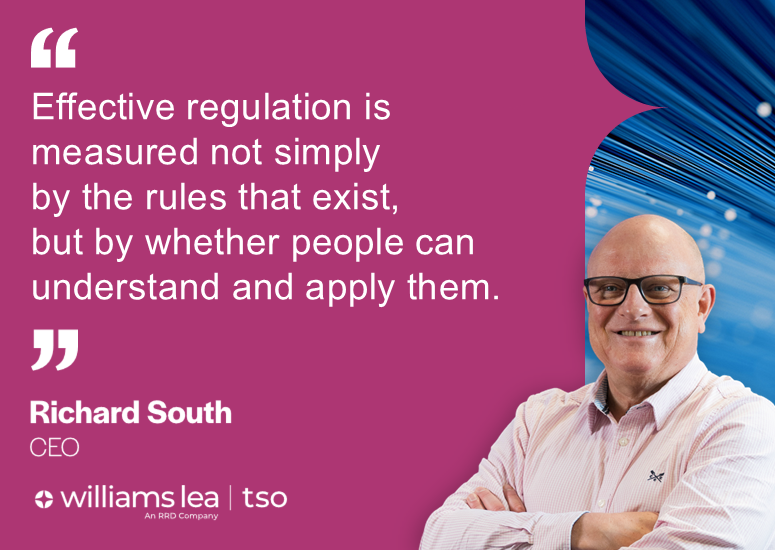
Blog post written by Richard South, CEO, TSO.
Follow TSO on LinkedIn to keep up to date with the TSO30 video, forthcoming articles and our latest insights.
Frequently asked questions
When was TSO established?
The Stationery Office (TSO) was established in 1996 following the privatisation of the commercial publishing operations of Her Majesty's Stationery Office (HMSO). TSO celebrated its 30th anniversary in October 2026.
What is the history of HMSO and its connection to TSO?
HMSO was established in 1786 to manage stationery procurement for government departments. Its responsibilities later expanded into official printing and publishing, including legislation, parliamentary papers and government information. In 1996, its commercial publishing operations became TSO, continuing a publishing heritage spanning more than two centuries.
What does TSO publish today?
TSO works with government departments, regulators and other organisations to publish authoritative information across print and digital formats. Its publishing portfolios include legislation, The Gazette, The Highway Code and learning to drive materials and other official and regulatory publications, supported by digital platforms, data services, mobile applications and learning resources.
How has official and regulatory publishing changed over the past 30 years?
Official publishing has evolved from predominantly print-based distribution to digital services, searchable websites, mobile applications and structured data. This has changed how people access, navigate and use authoritative information, while creating new opportunities to improve accessibility and usability.
What does the future hold for official and regulatory publishing?
The growing use of AI, structured information and digital technologies is changing how authoritative content is discovered and consumed. For publishers and content owners, ensuring information remains accurate, accessible, trustworthy and usable by both people and technology will be increasingly important.